Losing depth
A slip or canal that has filled with sediment until boats can no longer use it at parts of the tide.
Dredging
When a slip, canal, or channel has silted in, dredging restores usable depth. We evaluate the sediment and site, then match the right method and equipment to the project.
What this solves
A slip or canal that has filled with sediment until boats can no longer use it at parts of the tide.
A shoaled channel or entrance that limits when and how you can get in and out.
Access, disposal, and permitting questions that make a dredging project feel daunting to start.
Capabilities
On the coast
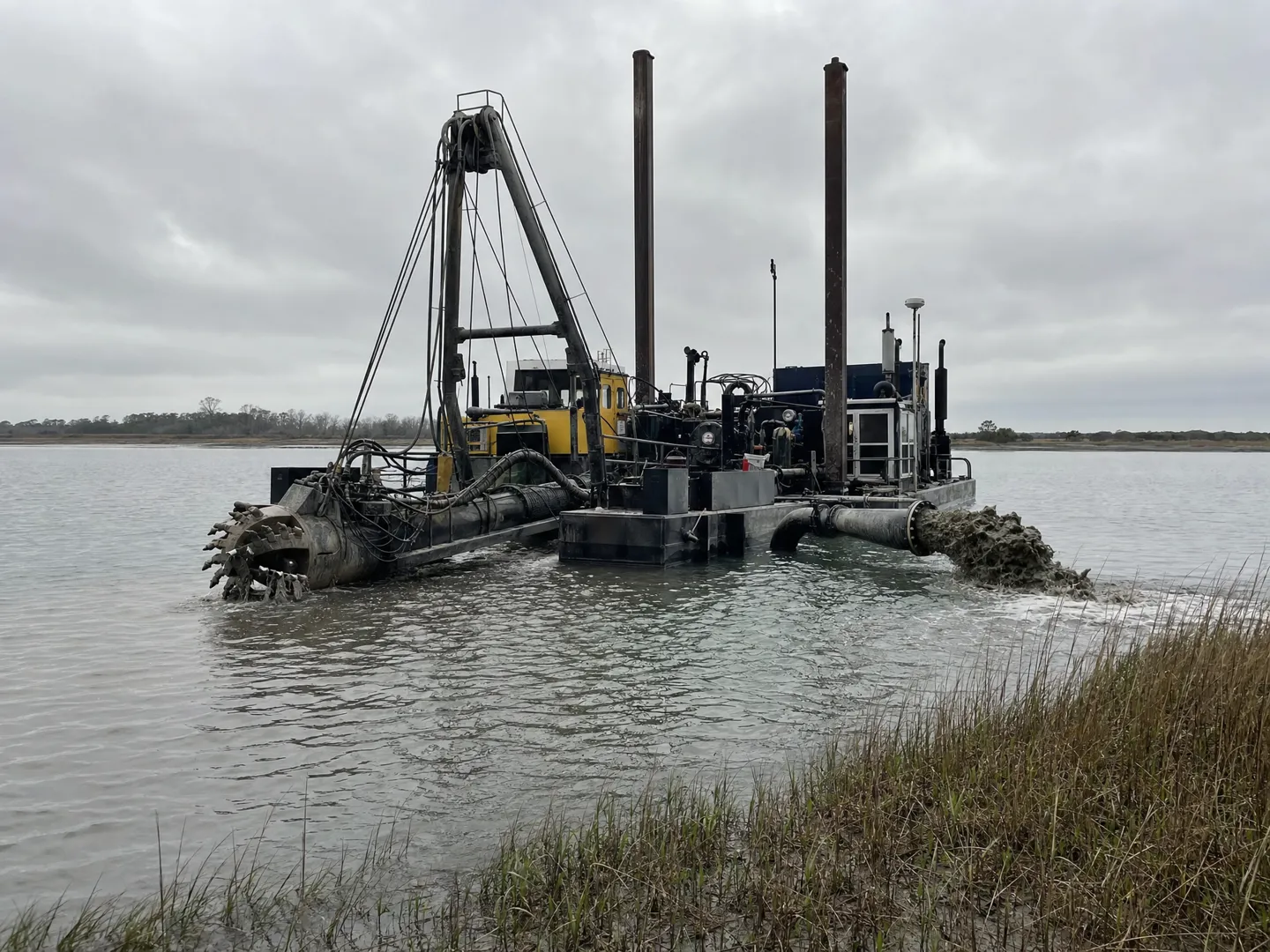
Hydraulic cutter-head, clamshell, dragline, and excavation each suit different sediments, volumes, and access. We evaluate the site before choosing.
Where material goes and how the work affects the surrounding water are central planning questions, not afterthoughts.
Dredging typically involves local, state, and federal review. We coordinate that process, but we do not imply permits are guaranteed.
We work with hydraulic cutter-head, clamshell bucket, dragline, and excavation-based dredging, using portable equipment and barges. The right method depends on the sediment, the volume, and access to the site.
Waterway dredging generally requires local, state, and federal approval. We coordinate that process as part of the project, but permitting is never guaranteed and timelines depend on the agencies involved.
We start with a sediment and site evaluation. Access, the amount and type of material, and disposal options all factor into which method and equipment fit the project.
Lets talk
Tell us what youre planning, where the property is located, and what youd like the waterfront to do for you. Well follow up to talk through options.